November has arrived, and it's time to embark on the annual NaNoWriMo writing challenge, to write a 50,000 words book in 30 days.
This year I'm working on a non-fiction book, despite the word "novel" in the challenge's title (National Novel Writing Month). Since it's no longer "national", I'm stretching the definition of "novel" a bit and using the challenge to write non-fiction. It's still a very personal and creative work, just not a work of fiction.
As with previous years, I prefer not to discuss the contents of my work while it's in process. But I can talk about the process of writing, and hope this will interest fellow writers and other language professionals.
This is a project I've been thinking about doing for a long time. I created a bit of an outline before I started. I wrote a list of 30 subjects that can serve as chapters or sections within the book. I don't know if they will all be of equal length, or whether I will be able to work neatly on one section a day, but the idea of 30 subjects in 30 days seemed like a helpful plan, at least before the fact. I'll have to wait and see how it turns out in practice.
I know that when I've finished writing I'll need a lot of editing. So far, I have little experience in editing my own creative work. I have yet to edit the two novels I have completed in previous NaNoWriMo challenges. I know that this is an important skill to acquire - both the technical aspects of editing (which I do professionally, but not for fiction, which has some different considerations) and the self-discipline of viewing my own writing objectively. I wonder why I have not done this yet for these novels, and what that says about my intentions as a writer...
With this book, it should be possible to rearrange the 30 sections in an order or structure that will start to emerge once they are written. I think I should do this after the whole thing is written and I can see it holistically. I know it may involve a lot of rewriting, but that might be easier when I can move around things I have already written. Editing this non-fiction book might be more similar to the sort of academic editing I do professionally, compared with editing novels, which I have never done.
I have already written more than the recommended minimum today, and feel very positive about this project. I will have more to say about the differences between writing fiction and non-fiction later on.
Good luck to all participants, and to writers everywhere!
Thursday, November 1, 2012
Friday, October 26, 2012
Connie Willis - Blackout and All Clear
Connie Willis, Blackout, Gollancz, 2010.
Connie Willis, All Clear, Gollancz, 2010.
These two books form one novel and should be read together. I'm not sure why it was published in two volumes, since novels of this size are sometimes published in a single volume.
This is a time travel historical novel. The story starts in Oxford in 2060, as three young historians set out to travel back to witness various events in World War II England. At the time of their departure the time travel operation has been thrown into chaos, with schedule changes and delays.
We follow Eileen, who has taken a position as a maid in a manor house in order to study the children evacuated from London; Mike, who wants to interview the heroes of the Dunkirk evacuation; and Polly, working as a shop girl in a London department store during the Blitz. They are really undercover, more like spies than anthropologists, and have to fit into the wartime society without raising suspicions.
They soon realize that the "drops" or gateways through which they can time travel back to 2060 are not functioning, and they are stuck in the past. At first, they expect a rescue team from their time to come and get them, but the months pass and this does not happen. Worse, they each start to have doubts about the very nature of time travel. The accepted theory states that the past cannot be changed, and so it is assumed that historians working undercover cannot affect events in any significant way. But their presence in the war seems to be changing things - they save lives and have various impacts on the people around them. This makes them worry that they might have changed the future, with two possible negative outcomes: the war might be lost, and the future might develop so differently that time travel is never invented.
I usually have trouble with time travel stories, so I was pleased that the paradoxes were discussed early on, explicitly and in an interesting way. This novel ignores the multiple world interpretation, and never seems to suggest that there could be more than one reality.
The three main characters get together and try to work out what has been happening, and to send messages that could be found by historians in 2060 to help the rescue team locate them. But each person approaches the problem in a different way, and they withhold information from each other at first. Not much is said about the lives they left behind in 2060, and they seem to adjust to their new lives quite easily, despite the difficult circumstances of the war.
The depiction of life in England during the war is vivid and touching, and bears the message that the war was won largely by everyone doing their bit, helping in whatever way was most appropriate. This portrayal of everyday heroism by "ordinary" people is a lesson worth teaching. I have lived through wars that involved attacks on the home front, and can say from my experience that people react in different ways, and the spirit of cooperation needs to be nurtured in such situations.
Much of the novel involves people rushing around trying to find clues, or leaving clues for the future. It has a restless feeling, teetering between desperation and hope. Eventually a satisfying conclusion is reached. This was one of the best novels I have read for a while, and I recommend it to a wide readership, even to those who would normally avoid anything involving time travel.
Connie Willis, All Clear, Gollancz, 2010.
These two books form one novel and should be read together. I'm not sure why it was published in two volumes, since novels of this size are sometimes published in a single volume.
This is a time travel historical novel. The story starts in Oxford in 2060, as three young historians set out to travel back to witness various events in World War II England. At the time of their departure the time travel operation has been thrown into chaos, with schedule changes and delays.
We follow Eileen, who has taken a position as a maid in a manor house in order to study the children evacuated from London; Mike, who wants to interview the heroes of the Dunkirk evacuation; and Polly, working as a shop girl in a London department store during the Blitz. They are really undercover, more like spies than anthropologists, and have to fit into the wartime society without raising suspicions.
They soon realize that the "drops" or gateways through which they can time travel back to 2060 are not functioning, and they are stuck in the past. At first, they expect a rescue team from their time to come and get them, but the months pass and this does not happen. Worse, they each start to have doubts about the very nature of time travel. The accepted theory states that the past cannot be changed, and so it is assumed that historians working undercover cannot affect events in any significant way. But their presence in the war seems to be changing things - they save lives and have various impacts on the people around them. This makes them worry that they might have changed the future, with two possible negative outcomes: the war might be lost, and the future might develop so differently that time travel is never invented.
I usually have trouble with time travel stories, so I was pleased that the paradoxes were discussed early on, explicitly and in an interesting way. This novel ignores the multiple world interpretation, and never seems to suggest that there could be more than one reality.
The three main characters get together and try to work out what has been happening, and to send messages that could be found by historians in 2060 to help the rescue team locate them. But each person approaches the problem in a different way, and they withhold information from each other at first. Not much is said about the lives they left behind in 2060, and they seem to adjust to their new lives quite easily, despite the difficult circumstances of the war.
The depiction of life in England during the war is vivid and touching, and bears the message that the war was won largely by everyone doing their bit, helping in whatever way was most appropriate. This portrayal of everyday heroism by "ordinary" people is a lesson worth teaching. I have lived through wars that involved attacks on the home front, and can say from my experience that people react in different ways, and the spirit of cooperation needs to be nurtured in such situations.
Much of the novel involves people rushing around trying to find clues, or leaving clues for the future. It has a restless feeling, teetering between desperation and hope. Eventually a satisfying conclusion is reached. This was one of the best novels I have read for a while, and I recommend it to a wide readership, even to those who would normally avoid anything involving time travel.
Wednesday, October 24, 2012
Ireland
We spent the first week of October in Ireland. This was our first visit, and in general the country seemed very similar to the UK in many ways: landscape, architecture, weather... We stayed in a friend's flat in central Dublin.
The purpose of our visit was a lecture Ivor was invited to give at the philosophy department of the National University of Ireland, Maynooth. The train ride from Dublin to Maynooth (in County Kildare) took about 40 minutes.
The university shares a campus with St. Patrick's College, a Roman Catholic Seminary. After the lecture, we were invited to lunch with the department's staff in Pugin Hall, the refectory of the seminary.
The next day we took a guided day trip to Glendalough and Kilkenny organized by Collins Day Tours. This was one of many tours offered at the tourist information office opposite the main entrance to Trinity College, provided by various tour companies.
We drove through the Wicklow mountains to Glendalough, where we walked along by the lakes and through the woods. It was cold and windy, but sometimes quite sunny, and the surroundings were spectacular.
We visited the 6th century monastic settlement of Glendalough, containing an impressive stone tower, a stone church called St. Kevin's Kitchen, the ruins of several other churches, and many graves from different periods.
From there we drove through the Wicklow Gap to Kilkenny, Ireland's medieval capital. We had a walk through the town, had time for lunch, and visited Kilkenny Castle.
We spent the rest of the week in Dublin, visiting some of its many museums and attractions. We were staying quite close to Trinity College, and visited the grounds and the Book of Kells exhibition. The college contains some attractive buildings, but the exhibition in the library was a bit disappointing, compared to most of the other museums we visited, where admission was free.
We visited Dublin Castle, and in its grounds the Chester Beatty Library, a museum well worth visiting, containing an exhibition of ancient books and religions.
Not far from Dublin Castle is Dublinia, an exhibition of recreated tableaux about the Vikings and Medieval Dublin. This museum also charged an admission fee, but we felt it was worth it for those interested in the city's history. The top floor contained an educational exhibition about archaeology, and the ticket also includes admission to the tower of St. Michael's church, with views over the city.
We visited the National Museum, displaying archaeological finds, including some preserved bog bodies. I must admit feeling a bit squeamish about seeing these remains, and all I could do was hope these individuals had experienced some happiness in their long-ago lives. Nearby, we also went to the National Gallery of Ireland, with its impressive art collection.
Apart from its museums, Dublin offers pleasant outdoor walks when the weather allows (and we were fortunate during our visit). St. Stephen's Green is a park I enjoyed visiting, and we also walked along the river Liffey.
North of the river we saw the Spire of Dublin, an impressive sculpture, and also watched a film at the Savoy Cinema, Dublin's oldest cinema.
Our central location made it convenient for us to visit Grafton Street, a pedestrianized shopping street. We saw the street entertainers and ate at Bewley's.
I really enjoyed this visit to Dublin. The people were friendly, the weather was good - not too cold or rainy, with some sunny spells. There were many interesting places to visit, many of them free, and a week was a good length of time to devote to one city. We didn't get to see very much of the rest of Ireland, but enjoyed what we did see.
The purpose of our visit was a lecture Ivor was invited to give at the philosophy department of the National University of Ireland, Maynooth. The train ride from Dublin to Maynooth (in County Kildare) took about 40 minutes.
| Royal Canal, Maynooth |
| Pugin Hall, St. Patrick's College, Maynooth |
| New Library, National University of Ireland, Maynooth |
The next day we took a guided day trip to Glendalough and Kilkenny organized by Collins Day Tours. This was one of many tours offered at the tourist information office opposite the main entrance to Trinity College, provided by various tour companies.
We drove through the Wicklow mountains to Glendalough, where we walked along by the lakes and through the woods. It was cold and windy, but sometimes quite sunny, and the surroundings were spectacular.
| Upper Lake, Glendalough |
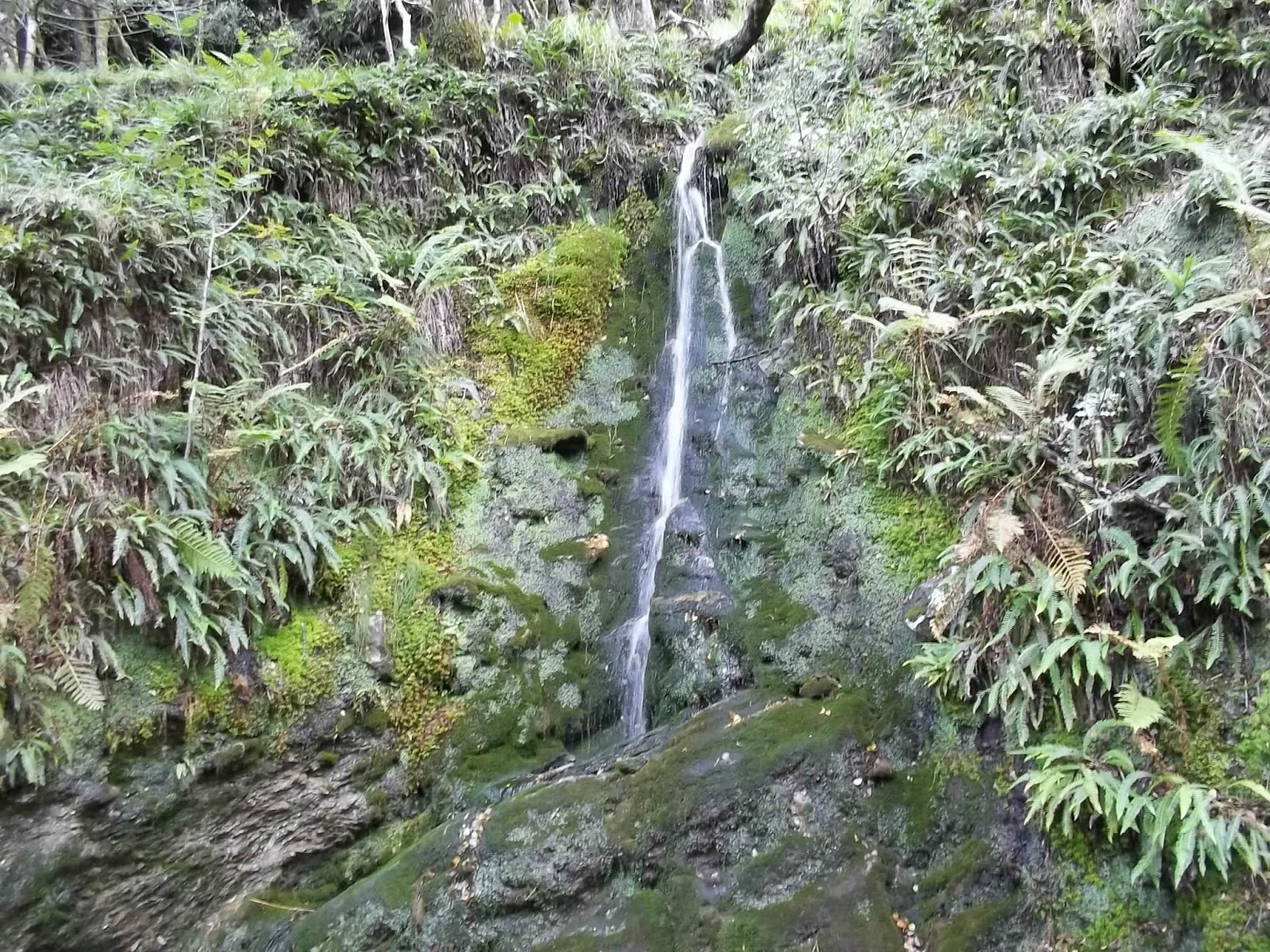
| Waterfall, Glendalough |
| Wood, Glendalough |
| Lower Lake, Glendalough |
| Tower and St. Kevin's Kitchen, Glendalough |
| Tower and graves, Glendalough |
| Street view, Kilkenny |
| Street view towards St. Canice's Cathedral, Kilkenny |
| View towards Kilkenny Castle |
| Kilkenny Castle |
| The Campanile, Trinity College, Dublin |
| Sphere within a Sphere, Trinity College, Dublin |
| Trinity College, Dublin |
| Dublin Castle |
| Dublin Castle |
| Chester Beatty Library |
| Scene at Dublinia |
| View from tower of St. Michael's Church, Dublin |
We visited the National Museum, displaying archaeological finds, including some preserved bog bodies. I must admit feeling a bit squeamish about seeing these remains, and all I could do was hope these individuals had experienced some happiness in their long-ago lives. Nearby, we also went to the National Gallery of Ireland, with its impressive art collection.
| National Gallery of Ireland |
| Pond, St. Stephen's Green |
| Ruth & Ivor, St. Stephen's Green |
| St. Stephen's Green |
| Samuel Beckett Bridge, River Liffey |
| The Spire of Dublin and statue of Jim Larkin |
| Grafton Street, Dublin |
Thursday, September 27, 2012
Reflections on tolerance
Yom Kippur is traditionally a time for reflection on one's self. This year I had the opportunity to learn a bit about myself from observing my reactions while painting work was being done in my house at the beginning of this week.
First, these two days made me think about what home means to me. Home is a private and safe space where I can be myself. I spend the vast majority of my life at home (because this is also where I work), and when people visit it is usually on my terms. During these two days we had furniture moved around and there was no privacy. I was reduced to sitting in one corner of the living room while the work went on, and the cats had to hide. It felt intrusive, and even though I knew the work had to be done to improve our standard of living, the process was not enjoyable.
The second thing I started to notice was what I perceived as the inconsiderate behaviour of the workers. Despite being told not to smoke indoors they smoked, at first only on the balcony, and then in other rooms. They also made more mess than was necessary, and their idea of cleaning up afterwards was scraping the most prominent paint marks off the floor, but no more than that. I kept thinking that if I had to work in someone else's house I would be more considerate of their personal space and their priorities. I became aware that this degree of consideration for others, which I consider as one of my most important qualities, must be quite rare. Most people do what they can get away with.
I then started asking myself why I wasn't being more assertive. I could have told them again not to smoke indoors, and perhaps nagged them to be more careful with the paint or to clean up the dust and paint more thoroughly. But I didn't want to create a bad atmosphere, so it appears that my desire for conflict avoidance outweighs my expectation of consideration from others. Even though their behaviour was obviously bothering me, I found that I could tolerate it.
The word "tolerance" comes from a Latin verb, tolero, meaning "to bear, to endure". This definition makes sense to me. A tolerant person can endure something unwelcome or unpleasant rather than reacting against it. Instead of just thinking about my own needs, I was willing to let the workers behave in the way they wanted. In a similar way, I am often willing to stand in the longest queue (line) in the supermarket because I know I am more patient than many others, and so it is easier for me to bear or endure the wait.
Tolerance comes from a place of inner strength. A tolerant person has empathy for others, is aware of the differences between individuals, and is willing to accept a wide range of behaviours and attitudes, even the disagreeable ones. I bore the workers' lack of consideration for my needs because I knew it was temporary, and the alternative, being assertive, would create tension and perhaps lower their motivation to do a good job. I choose to view this as strength rather than weakness on my part. The ability to put my own needs aside and allow others to do something I find bothering is a minor form of self-sacrifice I consider generous or even noble, to some extent.
First, these two days made me think about what home means to me. Home is a private and safe space where I can be myself. I spend the vast majority of my life at home (because this is also where I work), and when people visit it is usually on my terms. During these two days we had furniture moved around and there was no privacy. I was reduced to sitting in one corner of the living room while the work went on, and the cats had to hide. It felt intrusive, and even though I knew the work had to be done to improve our standard of living, the process was not enjoyable.
The second thing I started to notice was what I perceived as the inconsiderate behaviour of the workers. Despite being told not to smoke indoors they smoked, at first only on the balcony, and then in other rooms. They also made more mess than was necessary, and their idea of cleaning up afterwards was scraping the most prominent paint marks off the floor, but no more than that. I kept thinking that if I had to work in someone else's house I would be more considerate of their personal space and their priorities. I became aware that this degree of consideration for others, which I consider as one of my most important qualities, must be quite rare. Most people do what they can get away with.
I then started asking myself why I wasn't being more assertive. I could have told them again not to smoke indoors, and perhaps nagged them to be more careful with the paint or to clean up the dust and paint more thoroughly. But I didn't want to create a bad atmosphere, so it appears that my desire for conflict avoidance outweighs my expectation of consideration from others. Even though their behaviour was obviously bothering me, I found that I could tolerate it.
The word "tolerance" comes from a Latin verb, tolero, meaning "to bear, to endure". This definition makes sense to me. A tolerant person can endure something unwelcome or unpleasant rather than reacting against it. Instead of just thinking about my own needs, I was willing to let the workers behave in the way they wanted. In a similar way, I am often willing to stand in the longest queue (line) in the supermarket because I know I am more patient than many others, and so it is easier for me to bear or endure the wait.
Tolerance comes from a place of inner strength. A tolerant person has empathy for others, is aware of the differences between individuals, and is willing to accept a wide range of behaviours and attitudes, even the disagreeable ones. I bore the workers' lack of consideration for my needs because I knew it was temporary, and the alternative, being assertive, would create tension and perhaps lower their motivation to do a good job. I choose to view this as strength rather than weakness on my part. The ability to put my own needs aside and allow others to do something I find bothering is a minor form of self-sacrifice I consider generous or even noble, to some extent.
Saturday, September 15, 2012
John Scalzi - Fuzzy Nation
John Scalzi, Fuzzy Nation, Tor, 2011.
This book is a "reboot" of a classic novel, Little Fuzzy, by H. Beam Piper (1962). With permission, Scalzi took the story and characters from that novel and wrote his own take on those events. When I first heard about this, I read the original novel, and during the reading of Fuzzy Nation I could observe the differences. So this review will have to treat the novel on two levels: first as a work of fiction in its own right, and second as a reworking of an existing story.
This is a first contact story, set in a future where planets are exploited for their natural resources by ruthless corporations. When Jack Holloway, a contractor, discovers a new species and begins to realize they are sentient, this has implications for the planet's future. The story explores the moral and legal implications of this discovery, while focusing on the relationships and power struggles between the humans involved.
Holloway is not really a very sympathetic character. At first, he seems to be motivated by money, hoping to become very rich from his discovery of a valuable resource. We discover that he has a short temper and a history of violence and lying. His past actions led to him being disbarred as a lawyer (a profession not inspiring much identification for most readers, but relevant to the story), and to harming his former girlfriend Isabel's career. Also, the story focuses more on what he does than on what he is thinking, so his motivations only become clear after the events have taken place. This is a useful technique.
Instead of identifying with the main character, the reader's sympathies lie with the new species, as is often the case when the setting is quite black-and-white, with the powers of capitalistic greed ranged against these smaller and seemingly helpless creatures, which resemble cats and are portrayed as "cute". This identification might have been more difficult to achieve with aliens of a less "cuddly" type, which might have made the story more interesting in some ways.
The story contains moments of physical danger, action, pathos, and much courtroom drama. Eventually a satisfying conclusion is reached, and Scalzi spells out explicitly some of the reader's concerns about Jack's character.
The tone is light and humorous, most of the time, with some touching emotional moments. Readers familiar with Scalzi's other novels, or with his blog Whatever, will enjoy his usual style. This would also be a good introduction to Scalzi for new readers.
Finally, compared with the book Little Fuzzy, I found this version gave a less patronizing and human-centric account of the "fuzzys", and seemed more in tune with current social and cultural expectations. The comparison demonstrated to me the extent to which authors' contemporary milieu influences their writing, even when the stories are set in a fictional future society.
This book is a "reboot" of a classic novel, Little Fuzzy, by H. Beam Piper (1962). With permission, Scalzi took the story and characters from that novel and wrote his own take on those events. When I first heard about this, I read the original novel, and during the reading of Fuzzy Nation I could observe the differences. So this review will have to treat the novel on two levels: first as a work of fiction in its own right, and second as a reworking of an existing story.
This is a first contact story, set in a future where planets are exploited for their natural resources by ruthless corporations. When Jack Holloway, a contractor, discovers a new species and begins to realize they are sentient, this has implications for the planet's future. The story explores the moral and legal implications of this discovery, while focusing on the relationships and power struggles between the humans involved.
Holloway is not really a very sympathetic character. At first, he seems to be motivated by money, hoping to become very rich from his discovery of a valuable resource. We discover that he has a short temper and a history of violence and lying. His past actions led to him being disbarred as a lawyer (a profession not inspiring much identification for most readers, but relevant to the story), and to harming his former girlfriend Isabel's career. Also, the story focuses more on what he does than on what he is thinking, so his motivations only become clear after the events have taken place. This is a useful technique.
Instead of identifying with the main character, the reader's sympathies lie with the new species, as is often the case when the setting is quite black-and-white, with the powers of capitalistic greed ranged against these smaller and seemingly helpless creatures, which resemble cats and are portrayed as "cute". This identification might have been more difficult to achieve with aliens of a less "cuddly" type, which might have made the story more interesting in some ways.
The story contains moments of physical danger, action, pathos, and much courtroom drama. Eventually a satisfying conclusion is reached, and Scalzi spells out explicitly some of the reader's concerns about Jack's character.
The tone is light and humorous, most of the time, with some touching emotional moments. Readers familiar with Scalzi's other novels, or with his blog Whatever, will enjoy his usual style. This would also be a good introduction to Scalzi for new readers.
Finally, compared with the book Little Fuzzy, I found this version gave a less patronizing and human-centric account of the "fuzzys", and seemed more in tune with current social and cultural expectations. The comparison demonstrated to me the extent to which authors' contemporary milieu influences their writing, even when the stories are set in a fictional future society.
Tuesday, August 28, 2012
Holiday in Rhodes
Last week we had a short holiday in Rhodes. In terms of the landscape and some of the architecture, the island seems similar to Crete. We wouldn't normally choose to go to a destination as hot and humid during the peak season, but this holiday was to celebrate our silver wedding anniversary, so we put up with the weather conditions, to which we were probably better accustomed that most of the European tourists. We stayed in Rhodes town, in the north of the island. Our hotel was within walking distance of the city's main sites.
The Old Town is surrounded by a wall and moat, and on the first day we took the moat walk, around the outside of the walls. According to the map and the signs, there were several entrances and exits to this walk, but we couldn't find one and ended up walking almost the entire circumference of the Old Town before reaching a gate, a distance of about 3 km. The walk itself was pleasant, with alternating sunny and shady stretches, not too many people, and the sound of cicadas in the trees.
Once inside the walls, we found an attractive old town, with buildings of various ages, churches and mosques, many tourist-oriented souvenir shops, cafes, and restaurants. It was always quite crowded with tourists.
One of the most important attractions is the Palace of the Grand Masters, a reconstructed medieval fortress. On the ground floor we saw an exhibition about Medieval Rhodes, but the other exhibition, on Ancient Rhodes, was closed. We then went upstairs and saw the statue of Laocoon and a range of mosaics of different ages brought from the island of Kos. The rooms were decorated with items of furniture, tapestries, and Chinese vases. These items were not provided with signs, as if people would only be interested in the mosaics. The reason for this, I speculated, was that the reconstruction and furnishing of the palace was conducted by the Italians during the 1930s, for Mussolini, and perhaps the locals are embarrassed by the lavish decorations. However, since they are still on display and are part of the building's history, I think they should be exhibited and explained on equal footing with the mosaics, which were also imported at the same time. Another problem with this site was the humidity. There was no air conditioning (which is understandable, considering the volume of the rooms), but also no fans. The result was a sweltering and unpleasant atmosphere in which to view the exhibitions. I expect it would be much better to visit this site at cooler times of the year.
The Archaeological Museum is located in the 13th century hospital of the Knights Hospitaller, on the Street of the Knights. This is an extensive museum, with finds from all over the island and from many periods. We spent a long, hot afternoon there, viewing the various exhibits, including the Aphrodite of Rhodes, ceramics, jewellery, statues, and mosaics. The main hospital ward is an impressive, high-ceilinged hall, with a small chapel apse built into the centre. The museum also contains pleasant courtyards and gardens.
Outside the Old Town we spent some time in the Mandraki harbour, where two statues of deer on pillars mark the harbour entrance, and are traditionally believed to mark the locations of the feet of the ancient Colossus, one of the seven wonders of the ancient world.
We visited the Aquarium, at the northernmost tip of the island, where an underground grotto contains tanks of local marine life - fish, lobsters, crabs, sea stars, and so on. The New Town contains many impressive buildings, shops, parks, and restaurants. However, the signs of the Greek recession were sometimes apparent, in the relatively large number of closed shops and restaurants, and even a closed hotel or two. This was sad to see, and we can only hope that within a few years the town will thrive once more.
The Acropolis of Rhodes is located in an area named Monte Smith. We visited the restored ancient theatre and stadium, the temple of Apollo, and the cave of the Nymphs. This site lacked signs and there were fewer visitors there than in other places. It could benefit from some development. The views from this high ground were worth the climb.
Our one excursion out of the city was to Lindos, on the eastern coast of the island. Here we climbed up to the acropolis overlooking the bay. The acropolis contains a somewhat confusing mixture of fortifications and ruins from various periods, including a temple of Athena, a stoa (colonnade), and a 13th century church. The climb up the hill was sometimes slippery, and as in most places in Greece there were no safety rails. This popular site was crowded, and while we were warned it would be hotter there than on the rest of the island, we enjoyed a pleasant breeze at the top. The entire route through the village and up to the site entrance is lined with souvenir vendors and cafes, creating a colourful market. This site was well worth the visit, and the bus ride of just over an hour in each direction gave us a good impression of the island's landscape and villages. We also witnessed wild goats climbing the steep hillside.
This visit reinforced my love of Greece, its language, people, landscapes, history, food, and music. I don't know if I could live there, but it is one of my favourite places to visit. I hope to return soon!
The Old Town is surrounded by a wall and moat, and on the first day we took the moat walk, around the outside of the walls. According to the map and the signs, there were several entrances and exits to this walk, but we couldn't find one and ended up walking almost the entire circumference of the Old Town before reaching a gate, a distance of about 3 km. The walk itself was pleasant, with alternating sunny and shady stretches, not too many people, and the sound of cicadas in the trees.
Once inside the walls, we found an attractive old town, with buildings of various ages, churches and mosques, many tourist-oriented souvenir shops, cafes, and restaurants. It was always quite crowded with tourists.
The Archaeological Museum is located in the 13th century hospital of the Knights Hospitaller, on the Street of the Knights. This is an extensive museum, with finds from all over the island and from many periods. We spent a long, hot afternoon there, viewing the various exhibits, including the Aphrodite of Rhodes, ceramics, jewellery, statues, and mosaics. The main hospital ward is an impressive, high-ceilinged hall, with a small chapel apse built into the centre. The museum also contains pleasant courtyards and gardens.
Outside the Old Town we spent some time in the Mandraki harbour, where two statues of deer on pillars mark the harbour entrance, and are traditionally believed to mark the locations of the feet of the ancient Colossus, one of the seven wonders of the ancient world.
We visited the Aquarium, at the northernmost tip of the island, where an underground grotto contains tanks of local marine life - fish, lobsters, crabs, sea stars, and so on. The New Town contains many impressive buildings, shops, parks, and restaurants. However, the signs of the Greek recession were sometimes apparent, in the relatively large number of closed shops and restaurants, and even a closed hotel or two. This was sad to see, and we can only hope that within a few years the town will thrive once more.
The Acropolis of Rhodes is located in an area named Monte Smith. We visited the restored ancient theatre and stadium, the temple of Apollo, and the cave of the Nymphs. This site lacked signs and there were fewer visitors there than in other places. It could benefit from some development. The views from this high ground were worth the climb.
Our one excursion out of the city was to Lindos, on the eastern coast of the island. Here we climbed up to the acropolis overlooking the bay. The acropolis contains a somewhat confusing mixture of fortifications and ruins from various periods, including a temple of Athena, a stoa (colonnade), and a 13th century church. The climb up the hill was sometimes slippery, and as in most places in Greece there were no safety rails. This popular site was crowded, and while we were warned it would be hotter there than on the rest of the island, we enjoyed a pleasant breeze at the top. The entire route through the village and up to the site entrance is lined with souvenir vendors and cafes, creating a colourful market. This site was well worth the visit, and the bus ride of just over an hour in each direction gave us a good impression of the island's landscape and villages. We also witnessed wild goats climbing the steep hillside.
This visit reinforced my love of Greece, its language, people, landscapes, history, food, and music. I don't know if I could live there, but it is one of my favourite places to visit. I hope to return soon!
Thursday, August 2, 2012
Judith Flanders - The Victorian House
Judith Flanders, The Victorian House, Harper Perennial, 2003.
This book explores domestic life among urban middle-class families in England during the reign of Queen Victoria.
At first I expected it to focus on the material culture, discussing the social implications of the physical things people had in their homes. But the research here is based largely on various written reports of domestic life - the idealized version presented by those giving advice on how families should live, the realistic accounts in people's diaries and letters, and the fictional descriptions in novels.
The work is divided into chapters based on the various rooms of the house, focusing on the sort of activity that took place there. In some cases the connection is obvious, while in other cases the subject matter seems to have been inserted into the room that seemed most relevant.
One theme that emerges is the Victorian emphasis on keeping different aspects of life separate, as reflected in the functions of different rooms, the distinct activities of the various classes, and of course the clear gender roles.
It is always interesting to compare different cultures. People are all the same, to the extent that we should all be capable of understanding and empathy for each other. At the same time, the differences between people, both as individuals and as members of a specific culture, are what makes life fascinating. This book managed to explain not only the details of everyday life in a particular society, but also the values and social norms these details reflected.
Studying life in the past can make you wonder what your life would have been like had you lived in a different period. I am increasingly grateful for living in the present, and part of being grateful is knowing not to take anything for granted. I suppose a future observer might find our current age equally fascinating, and I can only speculate about the values and norms our domestic arrangements represent.
This would be a useful starting point for writers interested in setting stories in Victorian England, though I believe writers who are serious about their research should also examine source material directly.
This book explores domestic life among urban middle-class families in England during the reign of Queen Victoria.
At first I expected it to focus on the material culture, discussing the social implications of the physical things people had in their homes. But the research here is based largely on various written reports of domestic life - the idealized version presented by those giving advice on how families should live, the realistic accounts in people's diaries and letters, and the fictional descriptions in novels.
The work is divided into chapters based on the various rooms of the house, focusing on the sort of activity that took place there. In some cases the connection is obvious, while in other cases the subject matter seems to have been inserted into the room that seemed most relevant.
One theme that emerges is the Victorian emphasis on keeping different aspects of life separate, as reflected in the functions of different rooms, the distinct activities of the various classes, and of course the clear gender roles.
It is always interesting to compare different cultures. People are all the same, to the extent that we should all be capable of understanding and empathy for each other. At the same time, the differences between people, both as individuals and as members of a specific culture, are what makes life fascinating. This book managed to explain not only the details of everyday life in a particular society, but also the values and social norms these details reflected.
Studying life in the past can make you wonder what your life would have been like had you lived in a different period. I am increasingly grateful for living in the present, and part of being grateful is knowing not to take anything for granted. I suppose a future observer might find our current age equally fascinating, and I can only speculate about the values and norms our domestic arrangements represent.
This would be a useful starting point for writers interested in setting stories in Victorian England, though I believe writers who are serious about their research should also examine source material directly.
Subscribe to:
Posts (Atom)